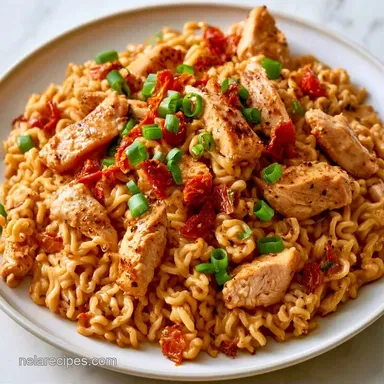
Ultra Creamy and Golden Chicken Ramen with Sun-Dried Tomatoes

- Total35 Mins
- Calories1097 kcal
- CuisineFusion
- Time: 15 min active + 20 min cooking
- Make it when: You need a comforting weeknight meal that feels fancy.
- Pairs with: Steamed broccoli or a crisp arugula salad.
- Make ahead: The sauce keeps in the fridge for 3 days, but cook noodles fresh.
Ultra Creamy and Golden Chicken Ramen
The smell of smoked paprika hitting hot oil fills the kitchen instantly. You'll see the chicken develop a dark, deep amber crust that contrasts with the rich, pale sauce. It's the kind of meal that looks like it took hours but actually comes together in one skillet.
This dish is a twist on the popular Italian-style cream sauce, but we're using ramen noodles for a quicker, springier bite. It's an ultra creamy and golden homemade meal that hits every craving for something savory and rich.
You can expect a sauce that clings to every noodle, balanced by the tart punch of sun-dried tomatoes. Since it uses minimal tools, it's an ultra creamy and golden easy option for busy nights.
Why This Bowl Works
- Tomato Oil: Using the oil from the sun-dried tomato jar carries the concentrated flavor directly into the meat.
- Deglazing: Adding chicken broth after searing lifts the browned bits from the pan, which adds savory depth to the sauce.
- Al Dente Noodles: Cooking the ramen just underdone prevents them from absorbing too much liquid and getting mushy in the pan.
Ingredient Deep Dive
| Ingredient | Role | If You Don't Have It |
|---|---|---|
| Heavy Cream | Base richness | Full-fat coconut milk (adds a slight coconut taste) |
| Parmesan | Salt and thickness | Pecorino Romano (much saltier, use less) |
| Sun-dried Tomatoes | Tangy umami | Fresh cherry tomatoes (more watery, less intense) |
Ingredients & Substitutes
- 1½ lb (680g) chicken breast, thinly sliced into bite-sized strips
- 2 tbsp (30ml) oil from the sun-dried tomato jar Why this? Infused with tomato flavor
- 1 tsp (2g) smoked paprika
- 1/2 tsp (3g) salt
- 1/4 tsp (1g) black pepper
- 3 cloves (15g) garlic, minced
- 1 medium (50g) shallot, finely diced
- 1/2 cup (80g) sun-dried tomatoes, drained and chopped
- 1 1/2 cups (360ml) heavy cream
- 3/4 cup (75g) grated Parmesan cheese Why this? Melts smoothly into the sauce
- 1/2 tsp (1g) red pepper flakes
- 1/2 cup (120ml) low-sodium chicken broth
- 12 oz (340g) ramen noodles
- 2 cups (480ml) water
- 1 tsp (5g) salt
You might see a myriad recipes for marry me chicken ramen, but the choice of noodle changes the vibe. If you want something different, check these swaps.
| Original Ingredient | Substitute | Why It Works |
|---|---|---|
| Ramen Noodles | Linguine or Fettuccine | Similar shape. Note: Increases boiling time significantly |
| Heavy Cream | Half and Half | Lighter sauce. Note: Less thickness, may need extra cheese |
| Smoked Paprika | Sweet Paprika | Mild flavor. Note: Loses the wood-fired aroma |
The Cooking Process
Stage 1: The Base
Bring a large pot of water with 1 tsp (5g) salt to a boil. Cook ramen noodles according to package instructions until they are just underdone (al dente), then drain.
Stage 2: Searing Chicken
While water heats, heat 2 tbsp (30ml) sun-dried tomato oil in a 12-inch skillet over medium-high heat. Toss chicken strips with 1 tsp (2g) smoked paprika, 1/2 tsp (3g) salt, and 1/4 tsp (1g) black pepper.
Sear for 3–5 minutes per side until a rich brown crust forms and the internal temperature reaches 165°F (74°C). Remove chicken and set aside on a plate.

Stage 3: Building Flavor
Lower heat to medium. In the same skillet, add 3 cloves (15g) minced garlic and 1 medium (50g) diced shallot. Sauté for 2 minutes until they look translucent. Stir in 1/2 cup (80g) chopped sun-dried tomatoes and 1/2 tsp (1g) red pepper flakes. Cook for 60 seconds to release the oils.
Stage 4: The Sauce
Pour in 1/2 cup (120ml) low-sodium chicken broth to deglaze the pan. Use a wooden spoon to scrape up the browned bits from the bottom. Stir in 1 1/2 cups (360ml) heavy cream and bring to a gentle simmer for 3–5 minutes until the liquid slightly thickens.

Stage 5: Finishing
Gradually whisk in 3/4 cup (75g) grated Parmesan cheese until the sauce is velvety and smooth. Return the seared chicken to the skillet and add the cooked ramen noodles. Toss gently for 2 minutes over low heat until the noodles are coated and the chicken is heated through.
Chef: If the sauce feels too thick after adding the noodles, splash in a tablespoon of water or extra broth to loosen it up.

Troubleshooting
If the sauce separates or the noodles get too soft, it's usually a heat issue. High heat can break a cream sauce, while too much boiling time ruins the ramen.
Fixing Broken Sauce
If the cream separates, it's usually because the heat was too high. Lower the temperature and whisk in a small amount of chicken broth to bring it back together.
Avoiding Mushy Noodles
Ramen cooks much faster than Italian pasta. If they're too soft, you likely boiled them for the full package time instead of pulling them out a minute early.
Preventing Dry Chicken
Chicken breast dries out quickly. Use a meat thermometer to hit exactly 165°F (74°C) and remove it immediately from the pan.
| Problem | Root Cause | Solution |
|---|---|---|
| Sauce is too thin | Not simmered long enough | Simmer for 2 more mins before adding cheese |
| Sauce is lumpy | Cheese added too fast | Whisk cheese in gradually over low heat |
| Bland flavor | Lack of salt/acid | Add a squeeze of lemon or a pinch more salt |
Noodle Comparison

Since this is a fusion dish, you can change the base. Here is how different options affect the final result.
| Noodle Type | Texture | Sauce Adhesion |
|---|---|---|
| Ramen | Springy and light | High (sauce coats well) |
| Linguine | Firm and chewy | Medium (needs more sauce) |
| Rice Noodles | Soft and slippery | Low (sauce slides off) |
Storage Guidelines
Keep leftovers in an airtight container in the fridge. According to USDA guidelines on leftovers, perishable food stays safe for 3 to 4 days.
Do not freeze this dish. The heavy cream and Parmesan can separate during freezing, and the ramen noodles will become mushy when thawed.
To reheat, place a portion in a pan over medium-low heat. Add a splash of water or chicken broth to loosen the sauce and heat until it reaches 165°F (74°C).
Critical Sodium Level
1424 mg of sodium per serving (62% of daily value)
American Heart Association recommendation: no more than 2,300 mg of sodium per day
Tips to Reduce Sodium
-
Eliminate Added Salt
Remove the added salt from both the chicken seasoning and the noodle boiling water to significantly lower the sodium content.
-
Reduce Parmesan Cheese
Use a smaller portion of Parmesan or substitute some of it with nutritional yeast for a similar savory, nutty flavor.
-
Rinse Sun-Dried Tomatoes
Rinse the sun-dried tomatoes under cold water before chopping to remove excess sodium from the packing oil and brine.
-
Switch to Unsalted Broth
Replace the low-sodium chicken broth with unsalted chicken stock or water to further decrease the salt levels.
-
Choose Low-Sodium Noodles
Swap the standard ramen noodles for a low-sodium noodle alternative or a whole-grain pasta option.
-
Enhance with Aromatics
Add fresh lemon juice, chopped parsley, or extra black pepper to brighten the flavor without needing additional salt.
Common Questions
Why did the reheated sauce turn lumpy?
High heat during reheating can break the cream sauce and cause separation. Use medium-low heat and add a splash of water or chicken broth to restore the texture.
How to balance the sauce thickness?
Simmer the heavy cream for 3 to 5 minutes until slightly thickened before adding the cheese. Add a splash of chicken broth if the sauce becomes too dry.
Can other cheeses be used?
Stick to the grated Parmesan to ensure the sauce remains velvety and smooth. Other cheese varieties may change the flavor profile or cause the sauce to break.
Will freezing the dish affect the quality?
Do not freeze this meal. The heavy cream and Parmesan can separate and the ramen noodles will become mushy upon thawing.
Could non-dairy milk work as a substitute?
Stick to the heavy cream listed in the recipe for the correct consistency. Other liquids may result in a sauce that is too thin or breaks during the simmering process.
How long can I store leftovers?
Keep leftovers in a sealed container in the refrigerator. These stay safe to eat for 3 to 4 days.
What causes the noodles to get mushy?
Overboiling the ramen during the first step ruins the structure. Cook them until they are just underdone so they maintain their bite when tossed in the sauce.
Ultra Creamy and Golden Chicken Ramen