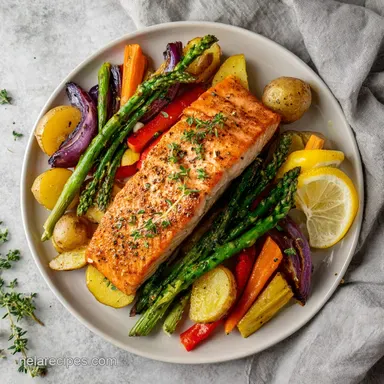
Simple One Pan Baked Salmon and Veggies
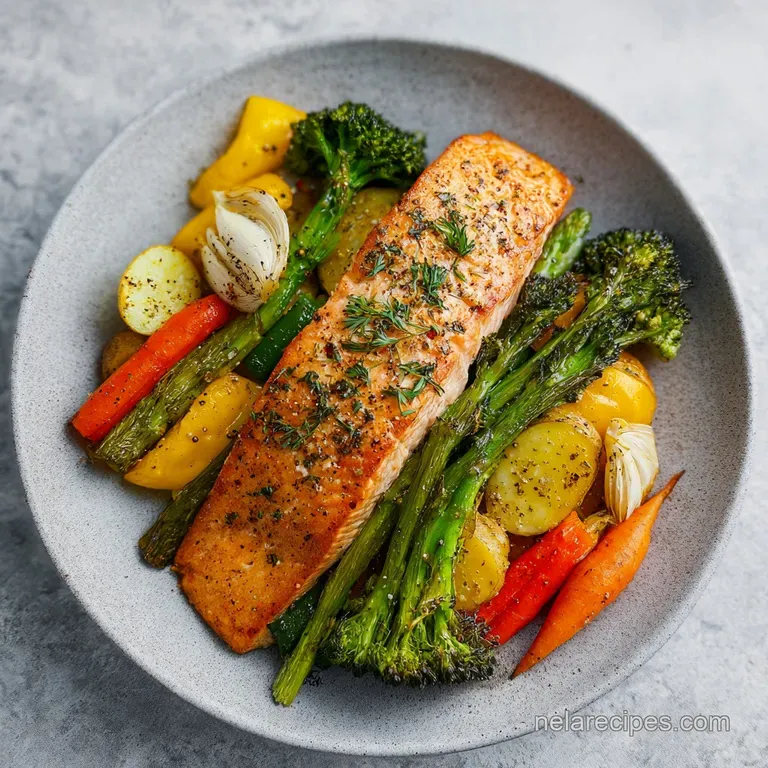
- Time:10 minutes prep + 15 minutes cook = 25 minutes total
- Flavor/Texture Hook: Zesty garlic lemon char with blistered tomatoes
- Perfect for: Stress free weeknight dinners or beginner meal prep
- Why This Meal Works
- Key Specifications and Timing
- Component Deep Dive and Science
- Essential Gear for Success
- Step-By-Step Cooking Process
- Troubleshooting Common Texture Issues
- Flavor Variations and Scaling
- Storage and Zero Waste Tips
- Serving Suggestions and Pairings
- Debunking Sheet Pan Myths
- Recipe FAQs
- 📝 Recipe Card
We’ve all been there. You see a beautiful photo of a sheet pan dinner, throw everything together, and 20 minutes later you’re staring at a puddle of grey water and rubbery fish. It’s heartbreaking, honestly.
I remember one specific Tuesday where I didn’t pat the salmon dry, and it basically steamed in its own juices until it looked like it belonged in a high school cafeteria. The asparagus was limp, the tomatoes were mush, and I ended up ordering pizza.
That failure taught me that successful roasting isn't about luck; it's about managing moisture and heat. You want that salmon to have a slight sizzle when it hits the pan and the vegetables to retain a snappy, vibrant bite. This recipe is the targeted fix for every mushy salmon experience you’ve ever had.
We’re going to use high heat and a specific emulsion to lock in the juices while creating a gorgeous, golden exterior.
Trust me, once you see those cherry tomatoes shatter under your fork and release their jammy juices over a perfectly flaky fillet, you’ll never go back to complicated multi pot meals. It is wholesome, comforting, and remarkably straightforward. Let's get into the "why" so you can nail this every single time.
Why This Meal Works
- over High heat Searing: Cooking at 400°F (200°C) allows the natural sugars in the tomatoes and lemon to caramelize quickly before the salmon can dry out.
- Emulsion Stability: Whisking the oil and lemon juice creates a thick glaze that clings to the food rather than running off and pooling on the pan.
- Moisture Management: Patting the skin dry removes surface water, ensuring the fish roasts instead of steaming in a cloud of vapor.
- Zoned Roasting: Placing the salmon in the center and veggies on the perimeter maximizes airflow, which is the secret to crispy edges.
| Thickness | Internal Temp | Rest Time | Visual Cue |
|---|---|---|---|
| 1 inch | 145°F | 3 minutes | Opaque pink throughout |
| 1.5 inches | 145°F | 5 minutes | Flakes easily with fork |
| 0.5 inches | 140°F | 2 minutes | Just turns light pink |
Putting the salmon in the middle of the tray is a trick I learned after years of burnt asparagus. The heat in most ovens circulates most intensely around the edges of the sheet pan, which is exactly where those hearty vegetables need the most help to get that slightly charred, savory finish.
Key Specifications and Timing
When we talk about "25 minutes total," I really mean it. But that efficiency relies on your prep flow. You want your oven preheated to exactly 400°F (200°C) before the fish even touches the tray.
If the oven is still warming up, the salmon will sit in a lukewarm environment, losing its precious moisture before the cooking even begins.
Timing is the most frequent place where home cooks stumble. A 6 oz fillet is the sweet spot for this 15 minute cook time. If your fillets are much larger, you'll need to add a few minutes, but be careful salmon continues to cook for a few minutes after you pull it out of the heat.
This is known as carryover cooking, and ignoring it is the fastest way to a dry dinner.
Component Deep Dive and Science
| Ingredient | Science Role | Pro Secret |
|---|---|---|
| Salmon Fillets | Protein Structure | Keep skin on for insulation |
| Lemon Juice | Denatures Protein | Whisk with oil to emulsify |
| Garlic | Aromatic Infusion | Mince finely for maximum surface |
| Cherry Tomatoes | Liquid Acid Source | Leave whole to prevent sogginess |
Using whole cherry tomatoes is a strategic move. If you slice them, they release all their water immediately, which creates that dreaded "pan soup." By keeping them whole, they roast until they literally pop in the oven, creating a built in sauce that stays contained until you're ready to eat.
For the Foundation
- 4 center cut salmon fillets (6 oz each): Why this? They cook evenly compared to tail pieces.
- Substitute: Arctic Char (similar fat content and texture).
- 1 lb asparagus: Why this? Provides a crisp tender contrast to the soft fish.
- Substitute: Thinly sliced zucchini or broccolini.
- 1 cup cherry tomatoes: Why this? Adds bursts of acidity and sweetness.
- Substitute: Grape tomatoes or diced bell peppers.
For the Garlic Lemon Glaze
- 3 tbsp extra virgin olive oil: Why this? high-quality fat carries the garlic flavor.
- Substitute: Avocado oil (higher smoke point, neutral flavor).
- 4 cloves garlic, minced: Why this? Provides the savory backbone of the dish.
- Substitute: 1 tsp garlic powder (in a pinch only).
- 1 large lemon, zested and juiced: Why this? Acid balances the fatty salmon perfectly.
- Substitute: Lime juice (for a brighter, tropical twist).
- 1 tsp dried oregano: Why this? Earthy notes that pair well with roasted lemon.
- Substitute: Dried thyme or Italian seasoning.
- 0.5 tsp kosher salt: Why this? Enhances every other flavor on the pan.
- Substitute: Sea salt or flaky salt for finishing.
I’ve found that the quality of your olive oil really matters here. Since we aren't using a ton of ingredients, each one has to pull its weight. A peppery, fresh olive oil makes the garlic pop in a way that cheap, flavorless oil just can't. If you’re looking for other stress free meals, this recipe reminds me of the simplicity found in a Cheesy Chicken Casserole, where the oven does all the heavy lifting for you.
Essential Gear for Success
You don't need a professional kitchen, but a large rimmed baking sheet is non negotiable. If the pan is too small, the ingredients will be crowded, and overcrowding leads to steaming. We want roasting!
I always use parchment paper because salmon skin can be notoriously sticky, and nobody wants to spend twenty minutes scrubbing a pan after a "simple" dinner.
A small whisk or even a fork for that lemon garlic emulsion is also key. You're looking for the mixture to become slightly opaque and thickened. This ensures the flavor stays on the salmon instead of sliding off onto the parchment paper. If you have a meat thermometer, now is the time to use it.
Pulling salmon at exactly 145°F is the difference between "okay" and "spectacular."
Step-by-step Cooking Process
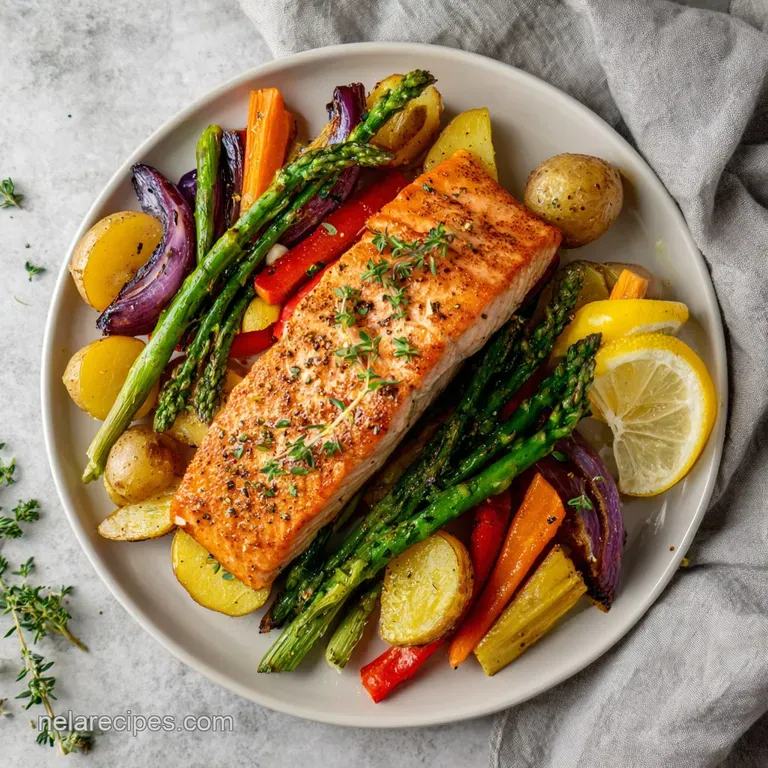
- Preheat oven. Set your oven to 400°F (200°C) and line your tray with parchment. Note: This temperature ensures the veggies char while the fish stays juicy.
- Dry the fish. Pat the salmon fillets completely dry with paper towels. Note: Removing surface moisture is essential for a good crust.
- Mix the glaze. Whisk olive oil, lemon juice, zest, minced garlic, and oregano until opaque. Note: This creates a stable emulsion that coats the food evenly.
- Arrange the tray. Place salmon in the center and scatter asparagus and tomatoes around them. Note: Central placement protects the fish from the most intense heat edges.
- Apply the sauce. Drizzle two thirds of the mixture over the veggies; toss to coat. Note: Ensure every spear of asparagus is lightly glistening.
- Glaze the salmon. Brush the remaining one third of the sauce onto the fish. Note: The zest in the sauce will caramelize beautifully on top.
- Roast the meal. Bake on the middle rack for 12–15 minutes until the tomatoes pop their skins.Note: The salmon should feel firm but have some give when pressed.
- Final garnish. Sprinkle fresh parsley over everything immediately after removing from the oven. Note: The residual heat will wake up the parsley's aroma.
Watching those cherry tomatoes is your best visual cue. When they start to wrinkle and a few of them "pop," you know the heat has penetrated deep enough to cook the salmon through. It’s a beautiful, colorful sight that feels much more impressive than the effort required.
Troubleshooting Common Texture Issues
The Problem of White Albumin
That weird white stuff that sometimes leaks out of salmon is called albumin. It’s just a protein that gets pushed out when the muscle fibers contract too quickly. While it's perfectly safe to eat, it usually means the fish was cooked a bit too fast or at too high a temperature.
Avoiding Limp Asparagus
If your asparagus is thick, it will take the full 15 minutes. If you have those very thin, spindly spears, they might turn to mush. If you're using very thin asparagus, wait and add them to the pan 5 minutes after the salmon has started cooking.
| Problem | Root Cause | Solution |
|---|---|---|
| Dry Salmon | Overcooking | Pull from oven at 140°F; let rest |
| Soggy Veggies | Overcrowded Pan | Use a larger sheet or two pans |
| Burnt Garlic | Minced too small | Use a microplane or mix well with oil |
Between those steps, remember that heat behaves differently in every oven. If you know your oven runs hot, check the fish at the 10 minute mark.
Common Mistakes Checklist
- ✓ Never skip the paper towel pat down for the salmon skin.
- ✓ Don't forget to zest the lemon before you juice it (it's impossible the other way around!).
- ✓ Avoid using a dark colored baking sheet if possible, as they can burn the bottom of the veggies.
- ✓ Ensure the garlic is fully submerged in the oil mixture so it roasts rather than burns.
- ✓ Resist the urge to flip the fish; sheet pan dinners are designed for one sided cooking.
Flavor Variations and Scaling
If you're cooking for two, simply halve the ingredients but keep the pan size the same. You want that extra space for the air to circulate! If you're scaling up for a crowd, use two separate sheet pans and rotate them halfway through the 15 minute cook time to ensure even browning.
When scaling up spices, I usually only go to 1.5x the amount even if I'm doubling the fish, as salt and dried herbs can quickly become overwhelming. If you’re looking for something sweet to follow this healthy meal, these No Bake Energy Bites are a great way to use up any leftover seeds or nuts in the pantry.
| Premium | Budget | Flavor Impact | Savings |
|---|---|---|---|
| Wild Sockeye | Farmed Atlantic | Atlantic is fattier and more forgiving | Save $5-8 per lb |
| Fresh Oregano | Dried Oregano | Dried is more concentrated and earthy | Save $3 |
| Organic Heirloom | Standard Cherry | Minimal once roasted and blistered | Save $2 |
Dietary Swaps
If you’re doing Keto, this recipe is already your best friend. For those avoiding nightshades, swap the tomatoes for sliced kalamata olives or capers to keep that acidic punch without the tomatoes. If you want a bit of a kick, a pinch of red pepper flakes in the garlic lemon mixture works wonders.
Storage and Zero Waste Tips
Storage: This meal is best fresh, but you can keep leftovers in an airtight container in the fridge for up to 2 days. To reheat, I highly recommend using a toaster oven or the "warm" setting on your oven.
Microwaving salmon is a crime in my house it makes the texture rubbery and makes the whole kitchen smell like a fish market.
Zero Waste: Don't throw away those lemon halves! Toss the squeezed lemon skins onto the baking sheet while it roasts to infuse even more citrus aroma into the air.
If you have leftover stems from the parsley, chop them finely and add them to the garlic mixture; they have tons of flavor and a nice crunch. Any leftover salmon can be flaked into a cold salad the next day or mixed with a little Greek yogurt for a quick salmon salad sandwich.
Serving Suggestions and Pairings
This dish is a complete meal on its own, but if you're extra hungry, it pairs beautifully with a side of fluffy quinoa or some crusty sourdough bread to soak up all that garlic lemon tomato juice. The acidity of the lemon cuts through the richness of the salmon, making it feel light but satisfying.
For a beverage, a crisp Sauvignon Blanc or even just a sparkling water with a slice of cucumber fits the vibe perfectly. It’s the kind of meal that makes you feel like you’ve really taken care of yourself without spending hours at the stove. It’s everyday luxury at its finest.
Debunking Sheet Pan Myths
One of the biggest myths is that everything on a sheet pan must be the same size to cook evenly. That's just not true! By placing the thicker salmon in the center and the smaller veggies on the edges, we use the oven's natural temperature gradients to our advantage.
Another misconception is that you need to "seal" the salmon by searing it in a pan first. While that creates a great crust, it defeats the purpose of a "one pan" meal. The 400°F oven temperature is more than enough to give the fish a beautiful finish as long as you didn't skip the step of patting it dry.
High heat is the key to that "shatter" effect on the skin without the extra stovetop mess.
Recipe FAQs
Is it true I must flip the salmon halfway through the baking process?
No, this is a common misconception. Keeping the salmon skin side down allows the bottom to cook evenly while the top stays tender, and flipping usually causes the fillets to break apart.
How to ensure the salmon fillets do not become rubbery when reheating?
Use a toaster oven or the warm setting on your conventional oven. Avoid the microwave at all costs, as it toughens the proteins and creates a fishy odor throughout your kitchen.
Can I use frozen salmon fillets for this recipe?
Yes, but thaw them completely and pat them dry first. Excess moisture from ice crystals prevents a good crust and causes the fish to steam instead of roast at 400°F.
How to know exactly when the salmon and vegetables are perfectly cooked?
Check that the salmon is opaque on the sides and the cherry tomatoes have begun to pop their skins. This visual indicator ensures the fish is cooked through and the vegetables are tender, usually occurring within 12 15 minutes.
Is it necessary to remove the salmon skin before baking?
No, the skin acts as a protective barrier against the heat of the baking sheet. Leaving it on helps keep the fillet intact and prevents the bottom of the fish from drying out during the 15-minute cook time.
How to infuse extra citrus flavor into the dish without adding more liquid?
Toss the squeezed lemon rinds onto the baking sheet while the meal roasts. The heat releases aromatic oils from the peels, which infuses the entire tray with a concentrated citrus scent as the salmon bakes.
How to prevent the garlic from burning while the salmon roasts?
Whisk the minced garlic thoroughly into the olive oil and lemon juice to create an emulsion. This coating shields the garlic from direct heat, allowing it to soften and flavor the dish rather than charring and turning bitter.
One Pan Baked Salmon And Veggies