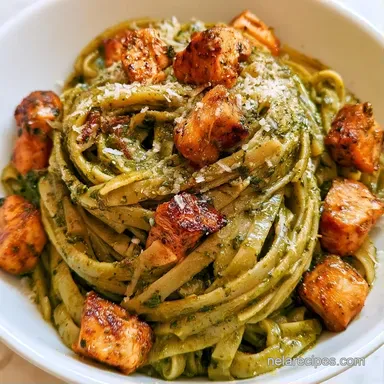
Creamy 30 Minute Pesto Chicken Pasta

- Total30 Mins
- Calories914 kcal
- CuisineItalian
- Time: 5 min active + 25 min cooking
- Make it when: You need a comforting dinner that doesn't take over your whole evening
- Pairs with: A crisp arugula salad or toasted garlic bread
Easy 30 minute pesto chicken pasta
Sizzling golden chicken cubes meeting bright, herbaceous pesto. That's the core of this meal. It's the kind of dish that saves a rainy Wednesday or a night where you're too tired to spend an hour at the stove but still want something that feels special.
This recipe is an everyday meal that tastes like a treat. It relies on a few smart moves in the pan to get a rich result without a long list of ingredients.
You'll get a bright, herb-forward dinner that keeps the chicken juicy and the pasta perfectly coated. It's simple, budget-friendly, and fits right into a busy schedule.
Quick Recipe Specs
This meal is designed for speed. By boiling the pasta while you sear the chicken, you cut the total time down to just half an hour. It's a high-protein dinner that feels light but keeps you full.
Why This Method Works
- Pasta Starch: The reserved cooking water acts as a bridge. It helps the oil-based pesto cling to the noodles instead of pooling at the bottom of the bowl.
- High Heat: Searing the chicken undisturbed for a few minutes creates a golden crust. This adds a deep, savory flavor that balances the fresh basil.
What You'll Need
Ingredient Deep Dive
| Component | Purpose | Substitute Notes |
|---|---|---|
| Basil Pesto | Primary flavor and fat | Sun-dried tomato pesto adds a tangier, deeper taste |
| Pasta Water | Emulsifies the sauce | Must be from the boiling pot to work |
| Parmesan | Adds salt and thickness | Pecorino Romano is saltier and sharper |
The Shopping List
- 1 lb Penne or Fusilli pasta Why this? Ridges and spirals hold onto the pesto better
- 1 tbsp Kosher salt
- 1½ lb Chicken breast, cut into 1-inch cubes
- 2 tbsp (30ml) Olive oil
- 3 cloves Garlic, minced
- 1/2 tsp Salt
- 1/2 tsp (1g) Black pepper
- 3/4 cup (180ml) Basil pesto
- 1/2 cup (50g) Freshly grated Parmesan cheese
- 1/4 cup Reserved starchy pasta water
Gear for This Recipe
You only need two main vessels. A large pot for the pasta and a 12-inch skillet for the chicken. The wide skillet is important so the chicken can sear in a single layer without steaming.
How to Make It
Stage 1: The Pasta Foundation
Bring a large pot of water to a rolling boil and stir in 1 tbsp Kosher salt. Add 1 lb Penne or Fusilli pasta, cooking according to the package directions until al dente. Set aside 1 cup of the starchy pasta water before draining.

Stage 2: Searing the Protein
While the pasta cooks, heat 2 tbsp Olive oil in a 12-inch skillet over medium-high heat. When the oil shimmers, add 1½ lb cubed chicken breast in a single layer, spacing the pieces 1 inch apart. Note: Cook in batches if your pan is too small to avoid crowding.
Let the chicken sear undisturbed for 3-4 minutes until a golden crust develops, then flip. Season with 1/2 tsp salt and 1/2 tsp black pepper. Stir in 3 cloves minced garlic during the final 60 seconds of cooking.
Remove the pan from heat once the chicken is opaque white throughout and registers 165°F (74°C) (USDA FSIS).

Stage 3: The Emulsion Finish
Transfer the drained pasta directly into the skillet with the chicken. Mix in 3/4 cup basil pesto and 1/4 cup of the reserved pasta water, tossing vigorously over low heat for 1 minute.
Remove from heat entirely and stir in 1/2 cup freshly grated Parmesan cheese. If the sauce is too thick, add more reserved pasta water one tablespoon at a time until the consistency is velvety and clings to the pasta.

When It Does Not Turn Out
If your sauce looks like oil floating on top of the noodles, the heat was likely too high when you added the pesto. Pesto is an emulsion of oil and basil; excessive heat breaks that bond.
If the chicken is pale, you probably added too many pieces to the pan at once. This drops the temperature and causes the meat to release moisture, which steams the chicken instead of searing it.
Fixing Common Problems
| Problem | Root Cause | Solution |
|---|---|---|
| Grainy or oily sauce | Overheating the pesto | Remove from heat and whisk in cold pasta water |
| Rubbery chicken | Overcooking past 165°F | Use a thermometer and pull from heat immediately |
| Dry or clumpy pasta | Not enough pasta water | Add reserved water 1 tbsp at a time while tossing |
Swaps and Variations

Since this is a budget-friendly base, you can easily shift the flavor profile. Using a different pasta shape or a different protein keeps the meal fresh.
| Original Ingredient | Substitute | Why It Works |
|---|---|---|
| Penne Pasta | Chickpea Pasta | Higher protein. Note: Cooks faster and has a grainier texture |
| Chicken Breast | Shrimp | Cooks faster. Note: Sear for only 2 mins per side |
| Basil Pesto | Spinach Pesto | Similar fat content. Note: Milder flavor than basil |
Storage and Leftover Tips
Store leftovers in an airtight container in the fridge for 3 to 4 days (USDA guidelines). Pesto pasta absorbs sauce as it sits, so it will likely look dry when you pull it out.
When reheating in a pan or microwave, add a splash of water or a teaspoon of olive oil and heat until the chicken reaches 165°F (74°C) inside. This loosens the sauce and restores the texture. Do not freeze this dish.
The basil in the pesto oxidizes and turns brown, and the cheese emulsion usually separates upon thawing.
Suggested Side Dishes
Because the pasta is rich and savory, pair it with something acidic or fresh. A simple arugula salad with lemon juice and olive oil cuts through the richness of the pesto. For something heartier, serve it with sliced cucumbers or roasted cherry tomatoes.
High in Sodium
940 mg of sodium per serving (41% of daily value)
American Heart Association recommendation: no more than 2,300 mg of sodium per day
Tips to Reduce Sodium
-
Pasta Water
Significantly reduce or omit the kosher salt used in the boiling water, as much of it is poured down the drain.
-
Low-Sodium Pesto
Use a low-sodium version of basil pesto or prepare a homemade version where you can control the amount of salt added.
-
Limit Parmesan
Reduce the amount of grated Parmesan cheese or use it sparingly as a garnish rather than a main ingredient.
-
Seasoning Swap
Replace the added salt on the chicken breasts with fresh lemon juice or a pinch of paprika for flavor without the sodium.
-
Flavor Boosters
Add extra fresh basil leaves or crushed red pepper flakes to increase the flavor profile without needing extra salt.
Your Questions, Answered
Why did my chicken come out pale instead of golden?
Avoid crowding the pan. Leaving space between the chicken cubes allows moisture to evaporate so they can brown instead of steaming.
How do I stop the pesto from turning brown or dull?
Remove the pan from the heat before stirring in the pesto and cheese. Excessive heat oxidizes the basil and dulls the vibrant green color.
What causes the pasta to turn dry or clumpy once the cheese is added?
Add more of the reserved pasta water. Stirring in the Parmesan at the very end off the heat prevents the cheese from clumping.
How can I stop the chicken from turning out tough or rubbery?
Cook the chicken only until the thermometer reads 165°F (74°C) inside. Overcooking the breast meat causes it to lose moisture and become rubbery.
Should I apply the pesto to the chicken before or after cooking?
Add the pesto after the chicken is fully cooked. Adding it too early can cause the basil to burn or lose its fresh flavor.
Which method keeps zucchini noodles from going watery?
Salt the noodles first and pat them dry with a paper towel. This removes excess moisture before they hit the pan.
Creamy 30 Minute Pesto Chicken Pasta